
Recurring faults deserve a traceable explanation.
ORINAC’s planned institution-controlled architecture could support authorised non-weapon reliability research by tracing assumptions, maintenance records, computational studies and accountable engineering review.
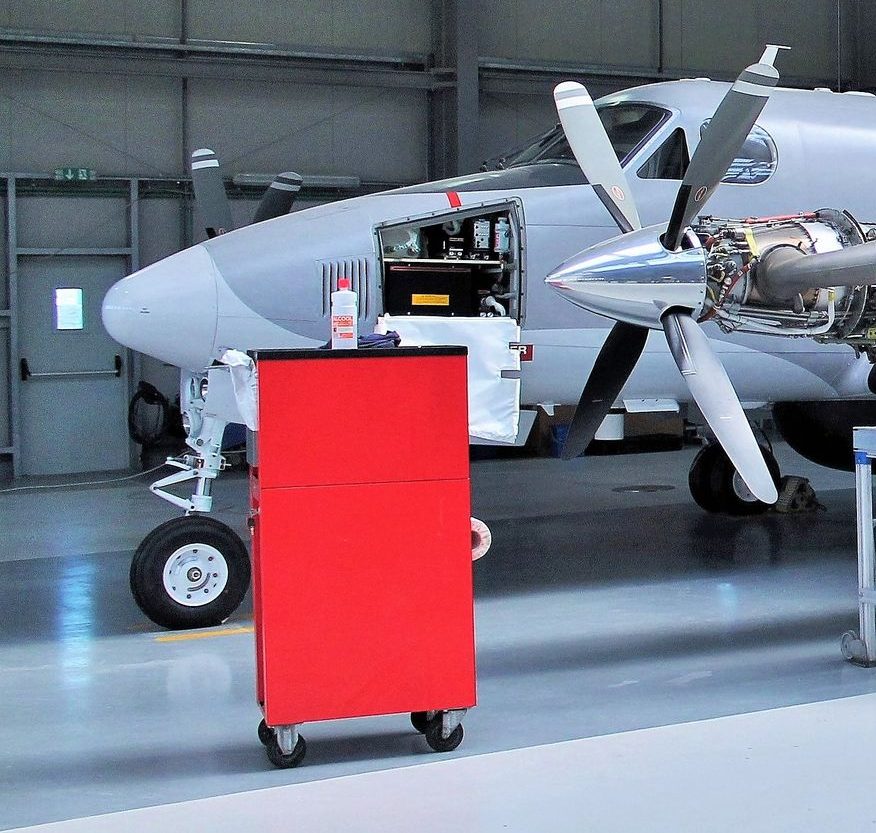
Can authorised maintenance evidence and engineering models help identify plausible causes of recurring equipment failures without exposing restricted records?
Scope. Non-weapon work only: maintenance, reliability, traceability, governance and assurance. ORINAC excludes weapon development, targeting, engagement and tactical applications. All work is subject to legal, security and export-control screening.
A maintenance hypothesis needs more than a model’s confidence.
When the same indication keeps appearing on a part, several explanations compete. The usage may be harsher than the load spectrum assumed. Corrosion pits may be starting cracks. Fit-up or preload may have varied across repairs. Or the part may be unchanged, and a new inspection method has simply begun finding what was already there.
The evidence for each sits in different systems, often in different formats. Bringing it together is painstaking and valuable. The example here is illustrative, with no aircraft type, fleet or real data, and the bracket’s failure mechanism is not assumed.
Defence research requires explicit authority, segregated data, qualified engineering oversight and compliance with applicable controls. ORINAC has not been approved for restricted workloads.
What a useful study would have to show.
| Question | Who asks | What would count as evidence |
|---|---|---|
| Which records could explain why the indication recurs? | Reliability engineers, maintenance planners | Each hypothesis linked to its source records; gaps listed; physical examination, such as fractography, on removed parts. |
| Did the fault grow, or did the inspection change? | Inspection leads | Inspection method, equipment and procedure history set against findings, reviewed by qualified inspection personnel. |
| Could an auditor reconstruct the whole process? | Assurance and compliance officials | Complete access and change logs; record of who concluded what; evidence that screening and authorisations took place first. |
Five stages, each with a person responsible.
- 01
Define
Set the question and its limits. Complete legal, security and export-control screening before any data is touched.
ResponsibleAuthorised program owner
- 02
Organise
Bring in only authorised records, in a controlled environment. Models would run locally or in an accredited environment.
ResponsibleData custodian
- 03
Model & test
Correlate indications with usage, repair and inspection history. Suggest hypotheses, and check each against source records.
ResponsibleReliability engineer
- 04
Independently verify
A separate reviewer checks every link back to source. Removed parts go for physical examination.
ResponsibleIndependent engineer
- 05
Review & release
A qualified engineer records the disposition. Airworthiness decisions remain with the competent authority.
ResponsibleEngineering authority
What this cannot establish
Records can suggest where to look. They cannot establish the cause of a crack, the remaining life of a part or its airworthiness. Those need physical examination, engineering analysis and the responsible authority’s decision.
What the work could produce.
- Reliability evidence mapFault hypotheses with source provenance and gaps.
- Analysis recordPermitted simulations and independent mathematical checks.
- Engineering disposition trailReviewed options, decisions and limitations.
- Controlled experiment requestWhat a specialist must measure or inspect next.
What is shown, and what is not.
- Current mechanism
- A CPU-only scientific verification workbench is in development. No domain-specific operational capability or institutional deployment is claimed.
- Potential workflow
- Non-weapon maintenance and reliability research only, with no assumption that sensitive systems or data can be accessed.
- Research candidate
- A future site-controlled deployment would require security and export-control review, approved local models and a qualified institutional sponsor.
- Excluded
- Weapon design, targeting, engagement, tactical functions, access to restricted datasets without authorization, and unqualified engineering sign-off.
Research cases and future features on this page are conceptual. The workbench, private AI, research-to-publication support and pooled compute must each earn their own evidence and approvals. No partner relationship or deployed domain capability is implied.
Public reference points
Cited for context on the field. No affiliation, endorsement or compliance is implied. Photograph is illustrative.